
假如爱有天意
China’s top pork-producing province rolls out homegrown 'gene chip' for breeding quality pigs_我的网站

一 |
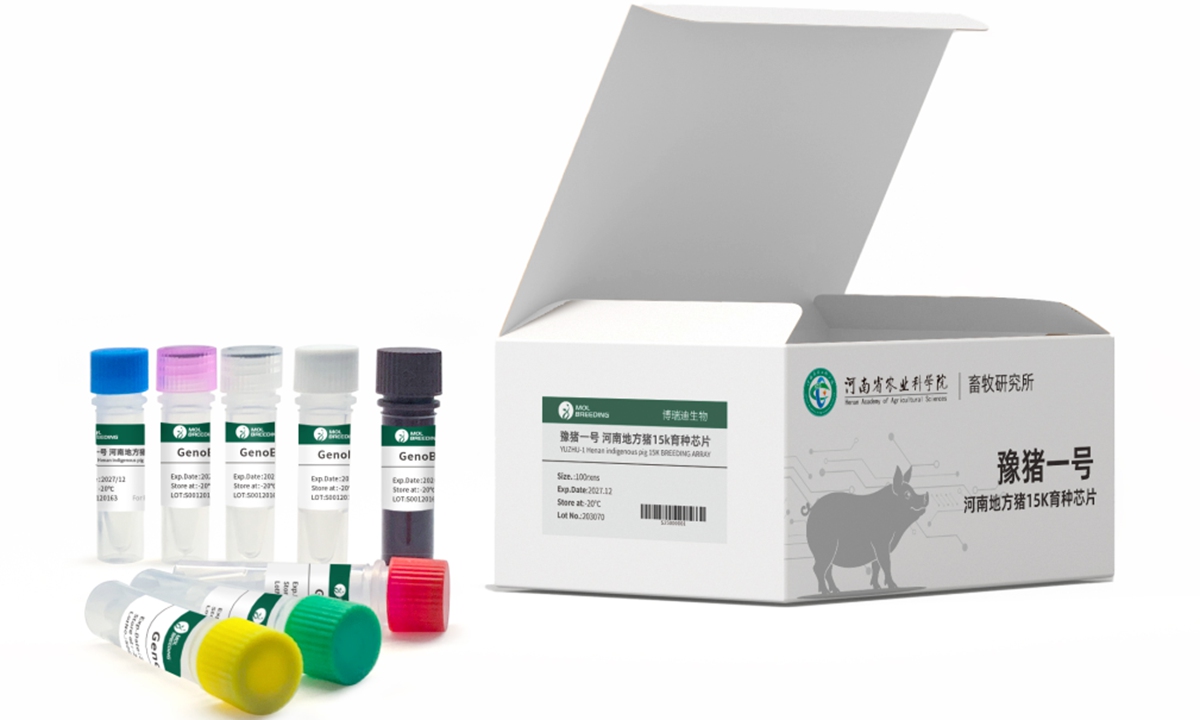
China's largest pork-producing province has introduced a genomic breeding tool designed for indigenous pig breeding, a sign that the province is shifting from expanding volume toward improving hog quality.
The Henan Academy of Agricultural Sciences announced the launch of Yuzhu-1 Henan indigenous pig 15k breeding array - commonly known as a gene chip - developed by the pig breeding team at its Institute of Animal Husbandry and Veterinary Science. It is the first such tool customized for the province's native pig stock, the institute said on Monday.
Henan is home to multiple native pig breeds prized by consumers for their good flavor. However, they carry a commercial burden compared with imported lean-meat breeds, as they grow more slowly, consume more feed per kilogram of weight gain and deliver thinner margins, noted Xing Baosong, head of the pig research office at the institute.
Lifting those hurdles depends on sharper selection, which in local herds has long relied on visual assessment of physical traits, which is slow and imprecise. Genomic tools can speed things up, but mainstream commercial chips were built on imported breeds and lose accuracy on native Chinese stock. Yuzhu No 1 instead draws on whole-genome resequencing data from five of Henan's native pig breeds and two locally bred lines.
"In breeding we rely on estimated breeding values to judge an animal's genetic potential," Wang Ligang, a professor at the Institute of Animal Sciences under the Chinese Academy of Agricultural Sciences, told the Global Times on Monday. "An array matched to the breed makes that estimate more accurate. Previously there was a real chance we were selecting the wrong animals. Now we are far more likely to be selecting the right ones - and to select accurately for the traits a breed is known for, whether that is tender meat or high fertility."
The efficiency gap between native and imported pig breeds remains wide, said Wang, who is also with the Pig Branch of the Chinese Association of Animal Science and Veterinary Medicine. Feed conversion ratios for local Chinese pigs run around 3.0, against below 2.5 for imported breeds, while reaching 100 kilograms takes native pigs 180 to 190 days compared with 130 to 140 days for exotic lines, he said.
Despite this, China's native pig breeds have their advantages.
"Our pigs taste better, partly because they are raised longer," Wang said. "And they are far more robust. Exotic breeds can suffer heat stress and die in summer; when disease hits, they can go down in large numbers. Local pigs rarely do. They tend to recover. Some breeds in Northeast China can even tolerate severe cold."
He added that imported breeds drive efficiency, while native breeds ensure quality and offer a reservoir of genetic diversity for disease and stress resistance - traits that can be bred back into commercial lines.
The province slaughtered 64.74 million pigs in 2025, up 7.4 percent year on year, with pork output at 5.22 million tons, according to the provincial statistics bureau, making it the top pork and pig producer nationwide, according to industry statistics.
In the first half of 2026, pig slaughter in the province rose a further 6.4 percent, accelerating 5.3 percentage points from the first quarter, against national growth of 1.7 percent. Xing said that more high-quality local black pigs will reach the market as Yuzhu No 1 is applied more broadly.
Other major pig production provinces such as Southwest China's Sichuan, Northwest China's Shaanxi and South China's Yunnan have all developed their own arrays.
"Provinces with the most developed pig production are the ones pushing upmarket," Wang said. "Scale is no longer the only measure. If every province reaches this level, a pattern of one dedicated array per province could gradually take shape for China's native breeds."
。
阿里云优惠券 先领券再下单 多线服务器具有什么优势?多线服务器通过整合不同运营商(如电信、联通、移动)及国际优质线路(如CN2GIA),实现流量智能调度与故障自动切换,有效解决跨网延迟、单点故障等问题。其核心价值在于:降低延迟40%+、可用性达99.9%、防御能力提升5倍,尤其适合跨境电商、全球流媒体等高并发场景。

二 | 一、深度解析多线服务器五大优势 1.跨网极速访问,延迟降低50% 智能路由:根据用户所在运营商(如电信用户自动接入CN2线路),动态选择最优路径,中美延迟可压至120ms内。 本地缓存加速:全球节点缓存静态资源,减少跨国传输,视频加载速度提升30%。 2.高可用架构,业务0中断 故障秒级切换:单线路宕机时,流量自动迁移至备用线路(如从普通BGP切至CN2),保障电商大促、直播等高并发场景稳定性。 负载均衡:百G级DDoS攻击流量被清洗节点分散拦截,业务不受影响。 3.合规与安全双保障 地域合规适配:数据可存储在特定地区节点(如香港/日本),满足GDPR等法规要求。 立体防护体系:集成硬件防火墙+分布式清洗,防御值高达150G,有效抵御CC攻击、SQL注入。 4.带宽利用率提升,成本直降30% 弹性扩容:突发流量(如新品发售)可分钟级增配带宽,避免长期闲置浪费。 共享资源池优化:多业务线共享骨干带宽资源,降低企业总带宽采购成本。 5.全球用户覆盖无死角 绕障能力:通过海外节点(如洛杉矶、圣何塞)规避区域性网络限制,保障外贸、游戏等业务畅通。 二、企业级场景解决方案 跨境电商:多线CN2优化线路,解决支付卡顿、订单流失痛点(实测结账成功率↑25%)。 在线教育:全球负载均衡确保欧美/东南亚学生同步4K直播无卡顿。

三 | 金融系统:冗余架构+秒级切换,杜绝交易中断风险。

四 | 选型建议:中小型企业可选“大陆优化线路”,兼顾速度与成本;大型业务需“CN2GIA+国际BGP”双线,强化全球覆盖。 主机推荐小编温馨提示:以上是对多线服务器具有什么优势的内容介绍,多线服务器是全球化业务的“高速公路网”,其核心价值在于速度×稳定×安全的三角平衡。选择如RAKsmart等具备智能路由、弹性防御、CN2优化能力的服务商,可让企业以更低成本驾驭国际流量洪流,真正实现“全球用户,本地体验”。

五 |
申请创业报道,分享创业好点子。点击此处,共同探讨创业新机遇!。
Current article:http://a314xq.saorongriwazhaofutouzhaojie.cfd/vx1igf/xjyv.html
Published on:06:14:25


1
世体:本周是伊尼戈上诉案以及奥尔莫注册案的关键阶段2
驾驭800斤铁骑 厦门交警女骑警练兵忙3
今日出伏!未来三天重庆有阵雨或雷雨4
前8月全省经济运行总体保持平稳5
岗位学雷锋 振兴新突破丨市文联:全面推动新时代抚顺文艺高质量发展6
首条横跨京冀城市轨道有望年底开通,北京轨道交通 22 号线(红庙 — 平谷)开启空载试运行7
上半年福州GDP总量保持全省第一 完成7094.78亿元8
就是给美国看的!伊朗不再藏着掖着,首次对外公开地下军工生产线,随风飘逸,原创 就是给美国看的!伊朗不再藏着掖着,首次对外公开地下军工生产线9
22岁男子篮球赛中突然倒地离世,父亲在直播中目睹10
Nginx防慢连接攻击实战:几行配置挡住Slowloris11
幸运粉丝:CBS将在超级碗直播中使用8K和AR技术12
贝索斯离婚,世界上最富有的王位或所有权的改变13
서울시, 9월 수도요금 체납 집중정리…55억 규모14
《Wolverine: Origin III》探索漫威备受争议的前传故事线15
2025年618活动哪天买最便宜?淘宝京东618活动结束时间已确定:从6月17日晚8点到6月18日全天28小时内最便宜划算!
- 随机推荐
1
「1年3ヶ月で首を切られ無職に」立憲・杉尾参院議員 高市政権の衆院解散への苦言が“有権者批判”と批判続出…区議会議員も「他責思考極まれり」2
从“避暑”到“避暑+”,文旅融合的新解法,从“避暑”到“避暑+”,文旅融合的新解法3
Fear and confusion mark key moments of Lahaina residents' wildfire 911 calls4
安徽公布2018年新生儿姓名:男“豪雨”女“伊诺”5
传奇球星罗斯亮相上海,诠释“运动王者,状态拉满”6
Hartalika Teej : भारत - नेपाल की साझी संस्कृति का प्रतीक तीज पर्व, पीछे है ये पौराणिक कहानी7
库里:巴特勒有应对关键时刻的诀窍 我若被包夹&他就能出很多机会8
买辆电车每个月能躺赚两千,什么技术路子这么野?9
“宿敌”上位!哈里彻底被王室抛弃!10
外交部:中国和伊朗的合作始终在国际法框架内进行,不应受到干扰破坏11
绿党议员被投诉恐吓同僚,副总理斥其“失去理智”,应“承担后果”12
奔驰“天价”补偿鼓励员工离职,此计划不涉及中国市场13
研究发现老年COVID-19幸存者面临更高的阿尔茨海默病风险14
China In Photos: China's national carbon emissions market sees trading volume top 930 mln tonnes15
明年不一定来中国?里夫斯代言合同到期后恐难续约 首年仅70万如今却暴涨